
Table of contents
- How crypto copy trading works
- Manual copying versus automated copying
- What can make your result differ from the copied trader’s result
- The five checks to make before you enable auto-trading
- A safer first copy-trading test
Crypto copy trading lets you follow another trader’s published trade ideas instead of creating every entry and exit yourself. It can be manual, where you approve each idea, or automated, where a configured service sends matching order instructions to your connected exchange account. The important distinction is simple: you may copy the trade instruction, but you do not copy the other trader’s financial situation, risk tolerance, or ability to absorb losses.
For beginners, copy trading is most useful as a structured way to study a repeatable process. It is not a shortcut around learning position sizing, leverage, order types, or the risks of volatile crypto assets. IOSCO notes that copy trading can expose investors to significant losses, including losses beyond their initial investment when leverage is used. See IOSCO copy-trading report.
How crypto copy trading works
A copy-trading workflow usually has four parts:
- A lead trader or signal source publishes an idea. A signal may specify the market, entry area, profit targets, stop-loss level, and sometimes leverage.
- You choose how to follow it. You can inspect the signal and act manually, or authorize a bot to follow future qualifying signals under settings you choose.
- Your settings translate the idea into orders. Your available balance, amount per trade, selected market, and safety limits affect what the bot attempts to place.
- The exchange handles the live order. The final outcome depends on market price, liquidity, order-book depth, exchange rules, and your account configuration.
That means a signal is not the same thing as a completed trade. Cornix distinguishes a theoretical channel signal from the entries, take-profits, and stop-loss orders that its bot manages on a connected exchange account. See signal and trade definitions.
Manual copying versus automated copying
Manual copy trading gives you direct approval over each idea, but it also requires you to review and place every order yourself. In a fast-moving market, a delayed manual entry can differ materially from the published signal.
Cornix automated copy trading is built to apply your chosen rules consistently. A supported channel can trigger orders on your connected exchange account and track later signal updates while your position size, market, and safety settings remain under your control. See the Cornix Signals Bot guide.
A practical starting point is to review several signals from a source, define the settings you want Cornix to apply, and begin with a controlled allocation. This lets you benefit from automated execution while keeping the strategy and risk limits aligned with your own plan.
What can make your result differ from the copied trader’s result
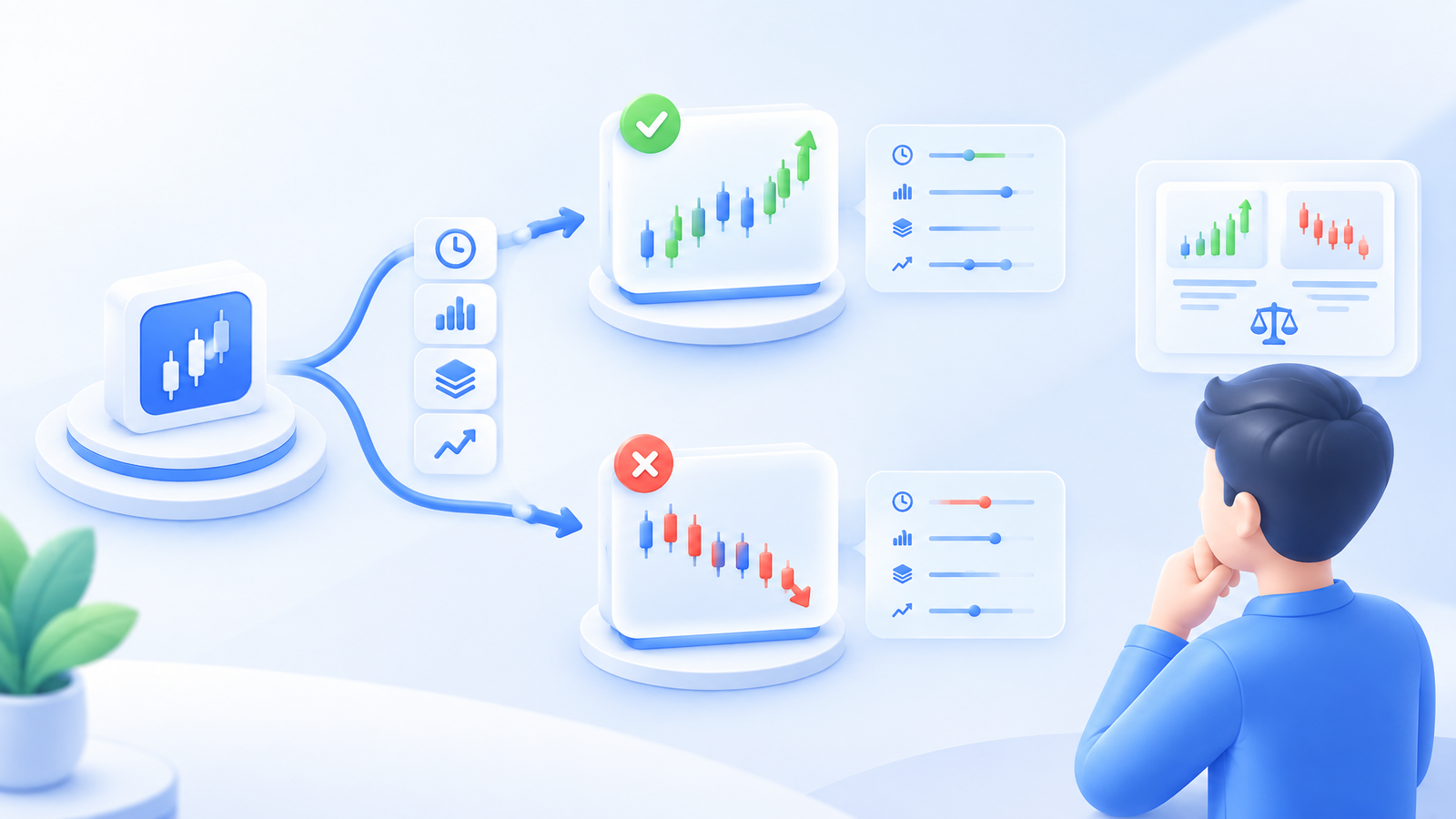
Two people can follow the same source and still get different outcomes. The lead trader’s reported signal may assume a precise entry price, while your order is subject to the live exchange order book. Your balance, chosen amount, market access, exchange, timing, and order configuration can also differ.
Cornix explains that theoretical signal performance and executed trades can diverge because actual orders face market conditions, exchange limitations, and personal account settings. See executed-trade discrepancy guide. Treat screenshots and channel summaries as context, not as a promise that your account can reproduce the same entry, fill, or return.
This is especially important with leverage. A small price move can have a much larger effect on a leveraged position, and a copied stop-loss does not guarantee an exact exit price in a fast market. Never choose trade size from confidence in the signal provider. Choose it from the maximum loss your own plan can tolerate.
The five checks to make before you enable auto-trading
1. Understand the signal source. Read several past signals, not just winning examples. Can you identify the market, direction, entry logic, stop, targets, and update process? If you cannot explain the instruction, do not automate it.
2. Start with a fixed small amount. Use an amount that makes the possible loss meaningful but manageable. Avoid increasing size after a short streak of wins, because a streak does not establish that a process will work in future conditions.
3. Set exposure limits before activation. A useful bot configuration limits the number of simultaneous trades and the number of open trades per symbol. Cornix provides both controls in its Signals Bot advanced settings, helping users define how much concurrent activity a bot can open. See Signals Bot risk controls.
4. Confirm the market and pair. Verify that the signal’s spot or futures market, trading pair, and exchange match what your account can trade. A bot may filter or skip an instruction that cannot be executed under its settings. Do not assume a signal published for one venue is interchangeable with every venue.
5. Know who can change or close the trade. In signal-based automation, later changes from a channel may affect auto-traded positions. Cornix documents that closing a channel signal can close trades opened through Signals Bot auto-trading. See signal management controls. Read the update and closure behavior before enabling a source.
A safer first copy-trading test
Use a narrow test rather than following many channels or coins at once. Pick one source, one market type, one small trade amount, and a short review window. Keep a record of the original signal, your actual order, fill price, fees, exits, and reason for any difference.
Review the workflow after both wins and losses. Ask whether the source’s instructions were understandable, whether your settings behaved as intended, and whether the maximum exposure stayed within your limits. If the answer is unclear, pause the automation instead of adjusting size or adding more sources.
The right selection principle is this: use crypto copy trading only when you can describe the signal, the exact amount at risk, the automated action, and the condition that makes you stop. If one of those is missing, retain manual control until it is clear.
Before following any signal channel, review the basics of crypto trading terms so you can assess the trade instruction rather than treating automation as advice.
See Understand crypto trading signals.
Ready to put those checks into practice? Explore Cornix supported signal groups and choose the source that fits your trading plan.
Frequently Asked Questions
Is crypto copy trading safe for beginners?
It can be used cautiously, but it is not inherently safe. Crypto prices can move sharply, and leverage can magnify losses. Start with manual review or a small, limited setup, and do not automate a source you do not understand.
Do copied trades always match the lead trader’s results?
No. Your fill price, available balance, account settings, exchange, fees, and market liquidity can differ. A published signal is an instruction or model, while your exchange account records the actual live orders.
Can I stop an automated copy-trading bot?
You should confirm the platform’s pause, edit, and closure controls before activation. A responsible workflow includes knowing how to stop new entries and how existing positions will be managed.
Should I use leverage when copy trading crypto?
Beginners should be especially careful with leverage because it magnifies both gains and losses. Do not use it unless you understand liquidation risk, order behavior, and the maximum loss your account can absorb.