Crypto Backtesting for Automated Trading Strategies.
Test defined trading rules on historical market data, compare outcomes, and identify weaknesses before considering live deployment.
4.7on Google Play and the App Store14-day free trial
Evaluate a strategy before risking capital
Backtesting applies a defined strategy to selected historical market data. With Cornix Backtesting, you can compare configurations, inspect hypothetical behavior, and identify assumptions that deserve more testing. Historical results are evidence—not a forecast—and should be reviewed alongside fees, slippage, liquidity, and changing market conditions.
Compare rules across different market conditions
Run the same strategy across multiple periods and examine more than headline return. Review drawdown, trade frequency, exposure, and how sensitive the outcome is to changes in settings before choosing what to test next.
- Select Your Trading Strategy and Configuration: Input your custom strategy and configuration
- Define Parameters: Set the timeframe for the backtest
- Run Backtest: Execute the backtest to see how your bot would have performed
- Analyze Results: Compare performance and choose your strategy
- Create a Bot with One Click: Easily create a bot based on the best results
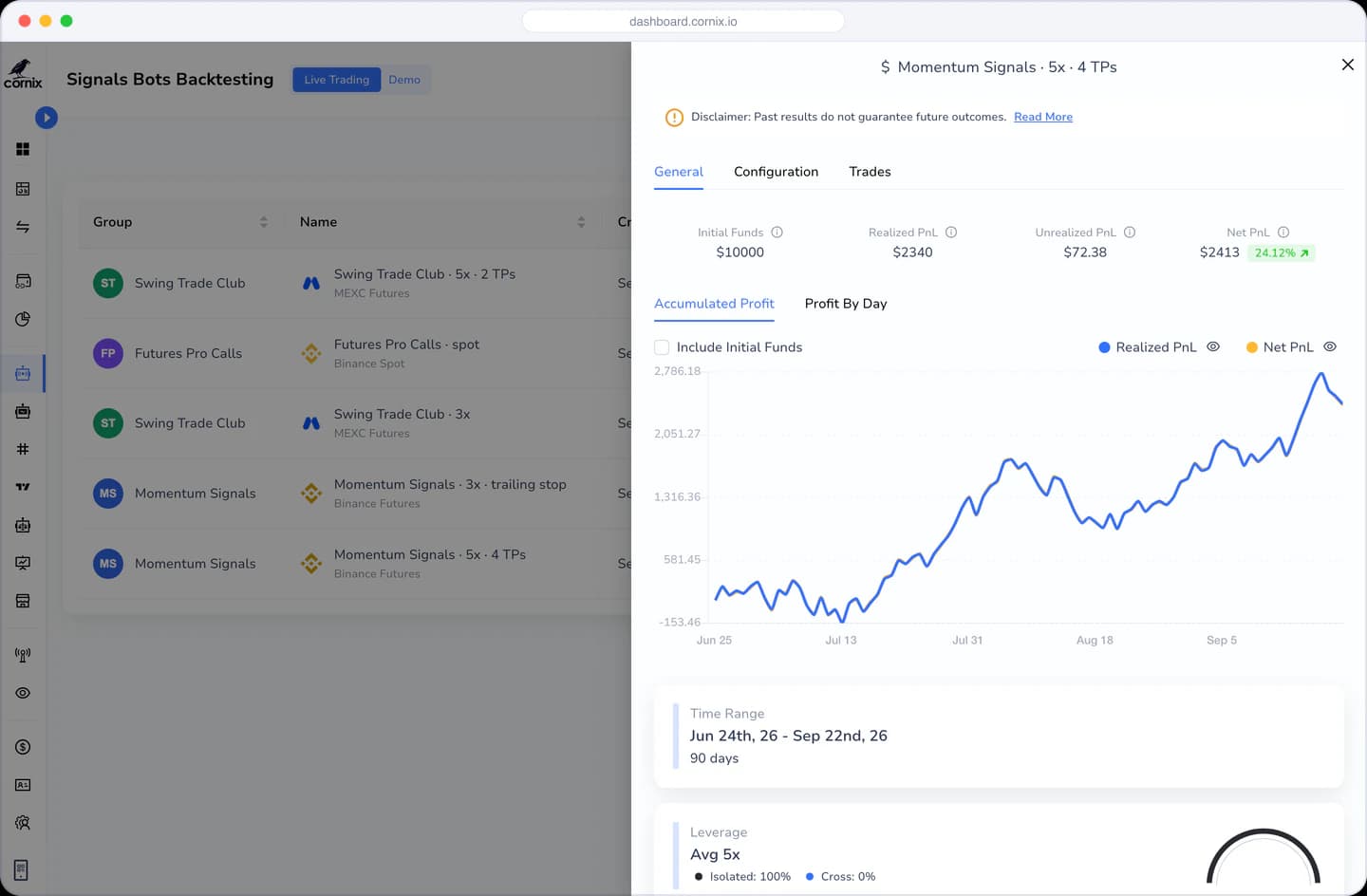
Review the complete result
- In-Depth Performance Metrics: Gain insights with ROI, win rate, and more
- Extensive Historical Data: Access a broad range of historical data from multiple exchanges
- Customizable Testing Parameters: Test different scenarios by adjusting various parameters
- User-Centric Interface: Enjoy a design that simplifies the backtesting process
- Analyse Complex Strategies and Configurations : Understand the nuances of sophisticated trading strategies
- Easily Create a Bot : Based on the backtest you did
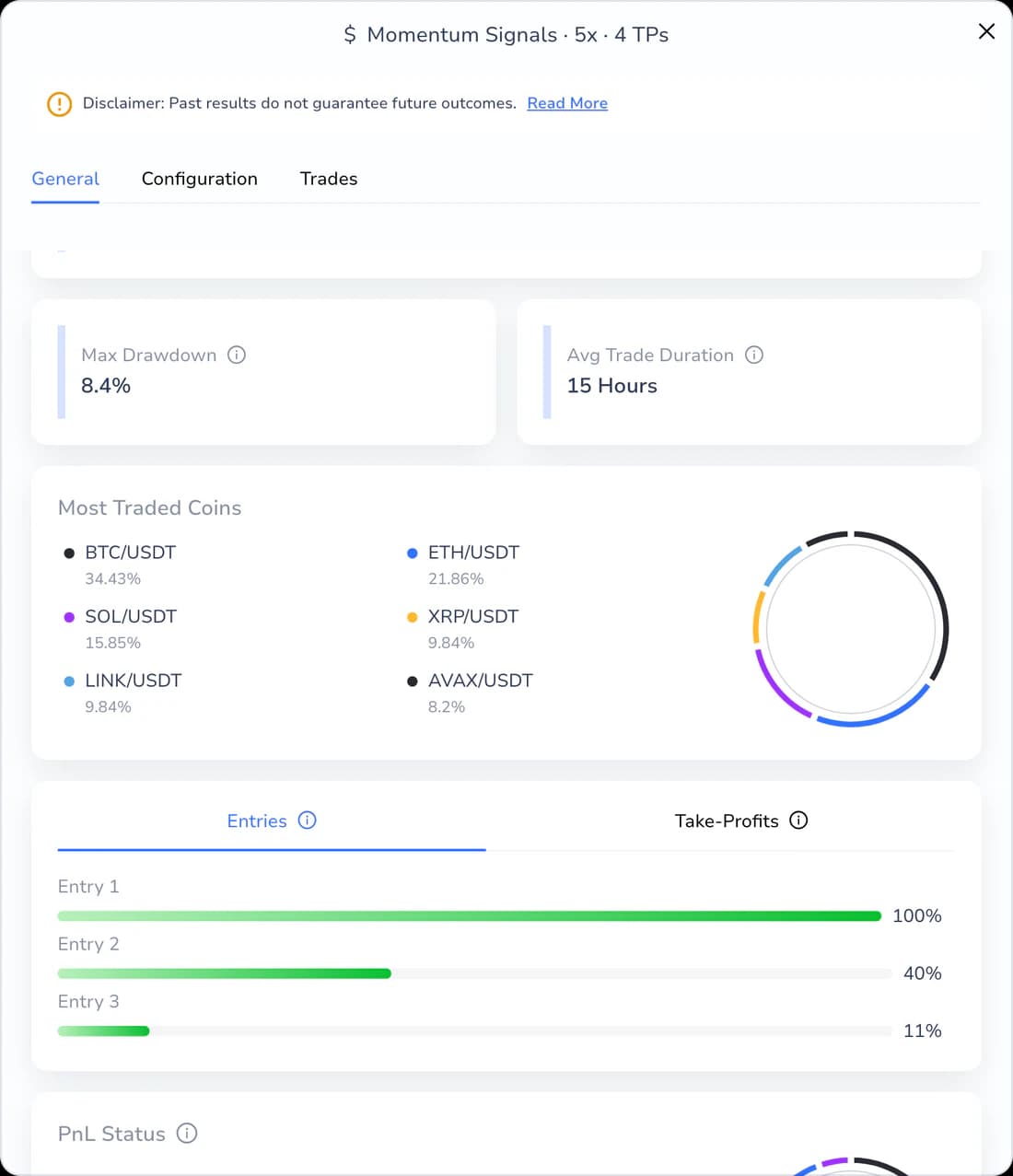
Evidence, not a prediction
Use backtesting as a decision tool
Backtesting shows how a defined strategy would have behaved on selected historical data. It can reveal weaknesses and support comparison, but it does not reproduce every live-market condition or predict future performance.
- 01
Test explicit rules
Define entries, exits, sizing, and risk controls before reviewing results. Changing rules after seeing the outcome increases the chance of fitting the strategy to the past.
- 02
Read more than return
Compare drawdown, trade count, win/loss distribution, market exposure, and sensitivity to different periods. A high headline return can hide unacceptable risk.
- 03
Validate outside the sample
Test multiple market regimes and reserve data for validation. When possible, follow historical analysis with paper trading before allocating live capital.
A more reliable testing process
- 1Write down the strategy rules and assumptions before running the first test.
- 2Include realistic fees, slippage expectations, and position-size constraints.
- 3Compare performance across trending, ranging, volatile, and quieter periods.
- 4Treat the result as evidence for further testing, not as a promised outcome.
Historical simulations may omit liquidity, execution delays, slippage, or changing market behavior and do not predict future results.
Frequently asked questions.
Does backtesting predict future trading results?
No. A backtest measures how defined rules behaved on selected historical data. Live results can differ because of liquidity, slippage, execution delays, fees, and changing market conditions.
Which backtest results should I review?
Review drawdown, trade count, win and loss distribution, market exposure, and sensitivity across different periods rather than relying only on total return.
What should I do after a backtest?
Challenge the result on different market periods and, when possible, test the workflow with simulated or controlled exposure before allocating more live capital.
Loved by traders
Thousands of crypto traders trust Cornix.
Our goal is your success. We do our best to make the Cornix experience simple and reliable, so you stay with us for years to come.
Great Trading view bot and support
“This bot have got very cool support and trading view bot systems I have used the trading view alert to take trades directly with my broker it is very fast and Sharp it execute trades at the exact trade price with no delay....”
I was interested to try DCA bots
“I wasn't sure that it will work, but I checked reviews and read the info on the website, and decided to try and figure out is it really good or no? And now I am really glad to see my results and everything was easy to set up, thanks.”
Best crypto trading platform i've tried
“I like their platform, works great on my iPhone so it's always there and their web is great for when I need to see more at one. Super recommend.”
The best auto trading bot for crypto
“The best auto trading bot for crypto. I have been using it for a year now and I don't want to change it for any other. Clear. Easy. Powerful. And the documentation and help service is great and fast. 10/10”
Cornix is the one and only BOT you need
“Cornix is the one and only BOT you need for trading crypto! Awesome tool to manual trade and automatically follow signals.”
Cornix is Awesome
“Cornix is excellent and support is great. Cornix is now my default trading platform. I can no longer go back to trading manually. Well done Cornix.”
Signal Provider onboarding XP: GREAT
“The onboarding as signal provider has been great with Ben and Cornix Team help and guidance. They are always happy to serve and help actively to achieve my main strategy goals and configuration.”

Ready to refine your trading strategies?
Start Backtesting Today
14-day free trial No credit card required