
Crypto Signal Trading Bots: How They Work, Risks, and Best Practices
Table of contents
- How a crypto signal bot turns a message into a trade
- The risks that matter before automation
- Best practices for a controlled first setup
- Monitoring is part of the strategy
Crypto signal trading bots can save you from watching a channel and entering every order by hand. They can also turn a weak signal source, oversized setting, or misunderstood alert into a repeated trading action. The practical verdict is conditional: use one only when you can explain the signal source, the exact exchange action it will trigger, your maximum exposure, and how you will stop it.
How a crypto signal bot turns a message into a trade
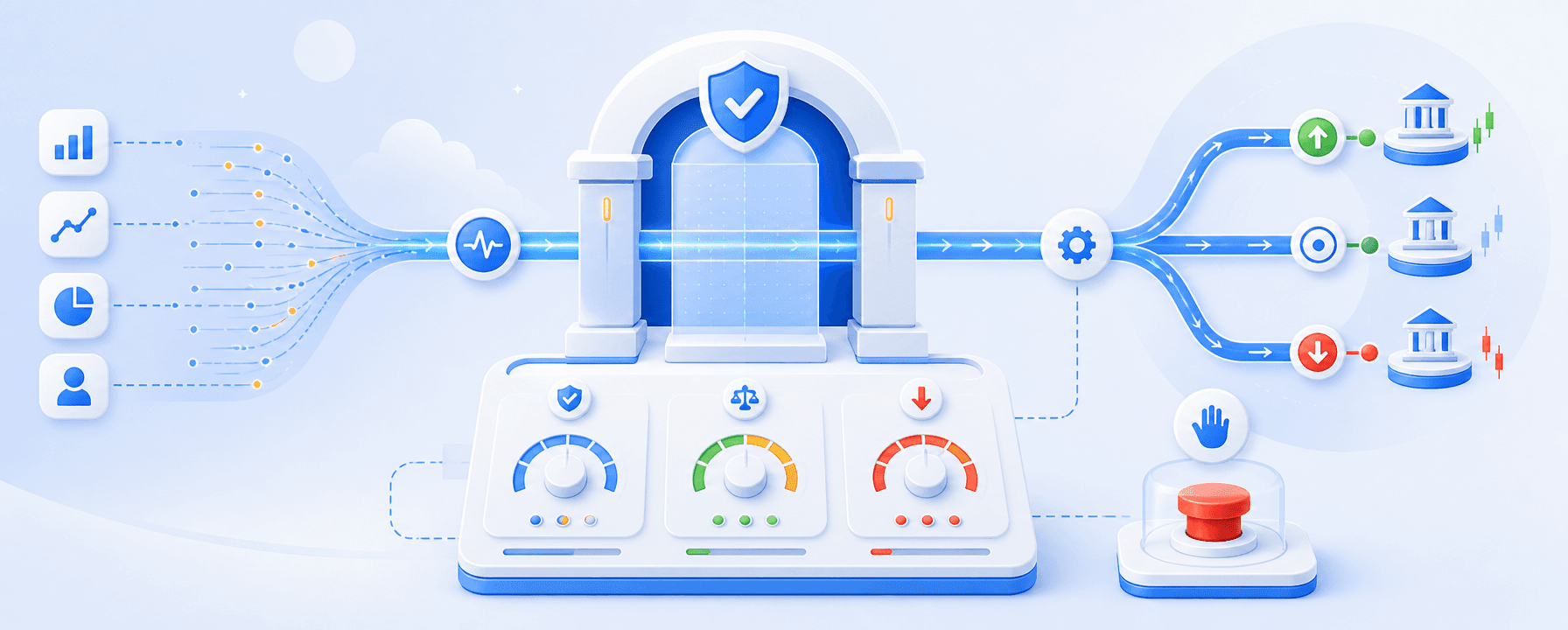
A signal bot sits between a source and your exchange account. The source may be a Telegram or Discord channel, an administrator’s published trade call, or your own structured instruction. The bot reads a supported signal, applies your configuration, and sends orders to the connected exchange account. The Cornix Signals Bot is built for this supported-channel workflow. The Signals Bot Help Center overview describes the implementation as detecting a new signal, placing matching orders, and tracking subsequent updates.
The important distinction is between a signal and a trade. A signal is a theoretical recommendation with entries, targets, and possibly a stop-loss. A trade is the real set of exchange orders created for your account. The Cornix signal and trade definitions explain that the trade can include entry, take-profit, and stop-loss orders managed on the connected exchange.
That gap is why a channel result is not your account result. Order-book depth, price movement, the exchange used, and your own bot settings can change whether and how an order fills. Signal execution differences notes that a theoretical channel target can be reached while a live order remains unfilled or fills only in part.
The risks that matter before automation
Signal-source risk comes first. A bot can follow a structured instruction consistently, but it cannot establish that the strategy is credible, suitable for your risk tolerance, or honest. Treat guaranteed returns, fixed win-rate claims, and claims that AI can foresee sudden moves as red flags. The CFTC warns that fraudsters use bot, algorithm, and crypto-asset claims to market unreasonable or guaranteed returns. CFTC bot fraud advisory
Configuration risk is the next layer. A signal may specify a pair, direction, leverage, entries, targets, and stop. Your settings can accept, override, or filter parts of that instruction. A bad default can matter more than a missed signal. For example, a bot without a portfolio-wide exposure ceiling may keep opening trades while earlier positions remain active.
Execution risk remains at the exchange. A valid instruction does not guarantee a fill at the signal’s stated price. Fast markets can create partial fills, skipped orders, slippage, or different outcomes across venues. The consequence is simple: do not judge a bot solely by screenshots of theoretical signal results.
Access risk is operational. API credentials may let the bot read balances and place orders. Give the connection only the permissions it needs, never enable withdrawals for a trading bot, and use exchange IP restrictions when available. Then keep the API secret out of chats, shared documents, and screenshots.
Best practices for a controlled first setup
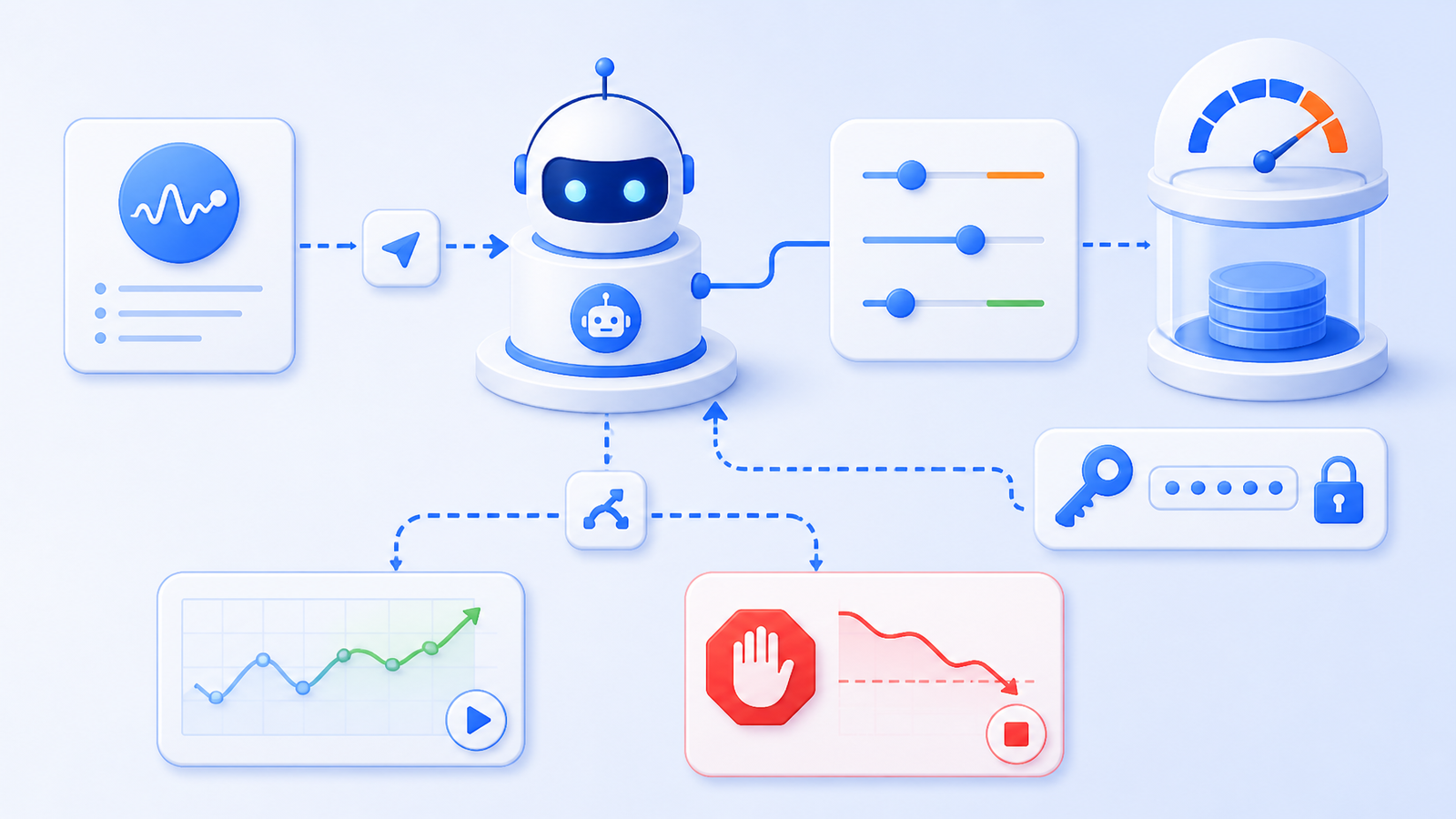
Start by evaluating the provider or channel before evaluating its performance claims. Read several complete trade histories, not only winners. Check whether entries, exits, stop logic, leverage, and updates are written clearly enough for another person to reproduce. Ask what happens when a signal is edited, cancelled, or arrives after a sharp move. If the process is vague, automation will make it faster, not safer.
Next, configure limits that match a loss you can tolerate. Useful controls include a fixed amount per trade, a cap on total concurrent value, a maximum number of open trades, pair filters, direction filters, and a cooldown for repeated signals. Cornix’s Signals Bot risk-control documentation covers simultaneous trades, concurrent dollar amount, minimum price and volume filters, cooldowns, and timeouts for waiting orders. Each has a practical consequence: it limits how much one noisy channel or fast market can commit before you review it.
For futures, decide whether leverage should follow the channel or be constrained by your own rules. Higher leverage can make a smaller adverse move materially more damaging. Do not let a default copied from a signal source become an unexamined account-level decision.
Use testing to validate the workflow, not to prove profitability. Run a test that sends a typical signal, an edited signal, and a signal for a pair you have excluded. Confirm the account, sizing, order type, and stop action. Cornix’s demo account guide provides simulated accounts without an API connection and makes Signals, DCA, Grid, and TradingView bots available in the demo environment.
Backtesting can help compare configurations, but it is not a live-execution promise. Cornix states that historical tests may not fully capture liquidity or slippage, and that its backtesting price checks occur every 15 seconds while live exchanges operate in milliseconds. See the documented backtesting assumptions. Review drawdown, number of open positions, leverage, and the periods in which the strategy struggled, rather than treating one profit figure as a decision.
Monitoring is part of the strategy
Once live, set a review routine. Check open orders and positions on both the bot platform and the exchange, inspect failed or partially filled orders, and know who can pause the bot. Review the workflow after channel changes, exchange-connection changes, or an unusual burst of signals. For community admins, publish signals consistently and make sure members understand that channel notifications are not proof of their individual fills.
Cornix is most relevant when your strategy input is a supported Telegram or Discord signal channel and you need configurable automation rather than manual order entry. Its Signals Bot can parse channel signals and its advanced settings let you limit the symbols, trade count, exposure, and operating hours used for execution. Start with the boundaries in the crypto bot safety guide before connecting live capital.
Selection principle: automate only a signal workflow you can independently inspect, cap, test, and stop. When you are ready to practice that workflow in a controlled environment, start your Cornix trial.
Frequently Asked Questions
What is a crypto signal trading bot?
A crypto signal trading bot is software that reads supported trading instructions from a channel or other source and creates configured orders on a connected exchange account. It automates execution, not the judgment of whether the signal is good.
Can a signal bot guarantee the same results as a signal channel?
No. Channel signals are theoretical, while your orders are subject to exchange prices, liquidity, order-book depth, timing, account balance, and your individual configuration. A target shown in a channel may not produce an identical fill in your account.
What API permissions should a signal bot have?
Use the minimum permissions required for the workflow, typically account-reading and trading permissions. Do not enable withdrawal permission for an automation connection, and add IP restrictions if your exchange supports them.
Should I use backtesting or a demo account first?
Use both for different questions. Backtesting helps compare a defined configuration against historical data, while a demo account helps you verify the actual setup, signal routing, sizing, and stop process without live funds. Neither can establish future returns. For setup details, see the demo account guide.
Related Articles

Top 5 Cryptocurrencies for the Year 2024 (and beyond)
Ethereum, Ripple, Binance Coin, Solana, and Cardano are poised to dominate the 2024 crypto bull market with key updates and expansions.

The Rise of Crypto Trading Bots: Exploring the Advantages
Dive into the world of automated crypto trading with Cornix! Discover our range of bots tailored to optimize your trading strategy and maximize your profits.

How to Use TradingView Paper Trading to Test Crypto Strategies
TradingView Paper Trading is best for rehearsing a defined crypto trade process in live market conditions with virtual funds. Use it to test entries, exits, sizing, and discipline before considering live execution.