Table of contents
- Choose by decision process, not by promised returns
- Automation improves execution consistency, not strategy quality
- The hidden workload moves from clicking to system control
- A hybrid workflow can contain the failure when conditions change
- Test the workflow before deciding whether to automate it
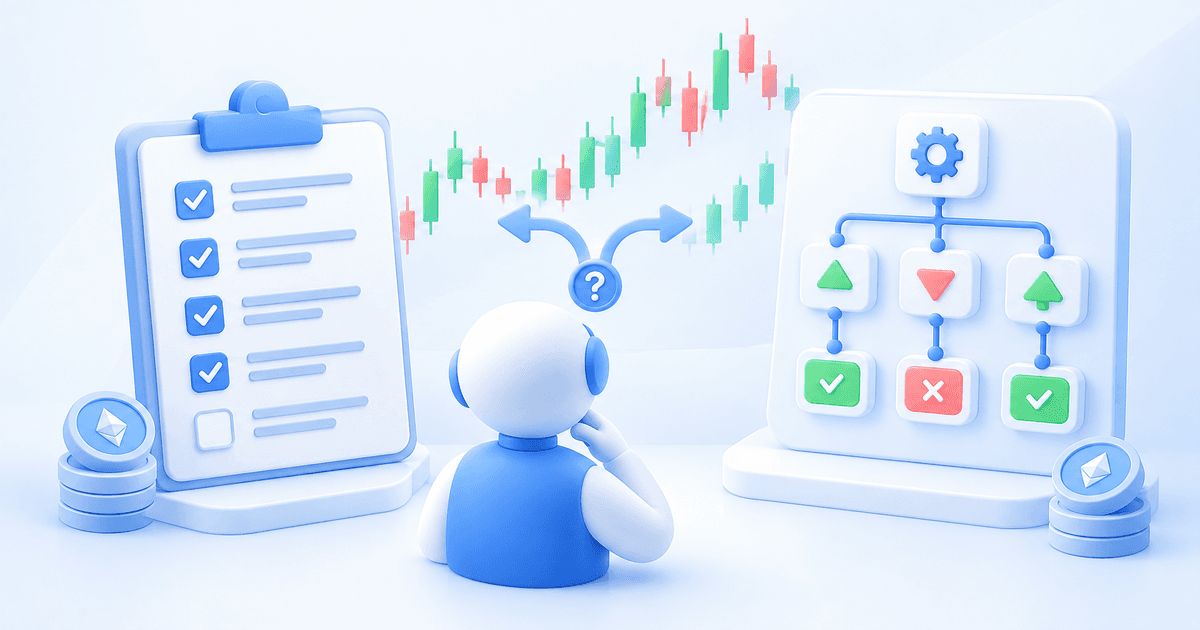
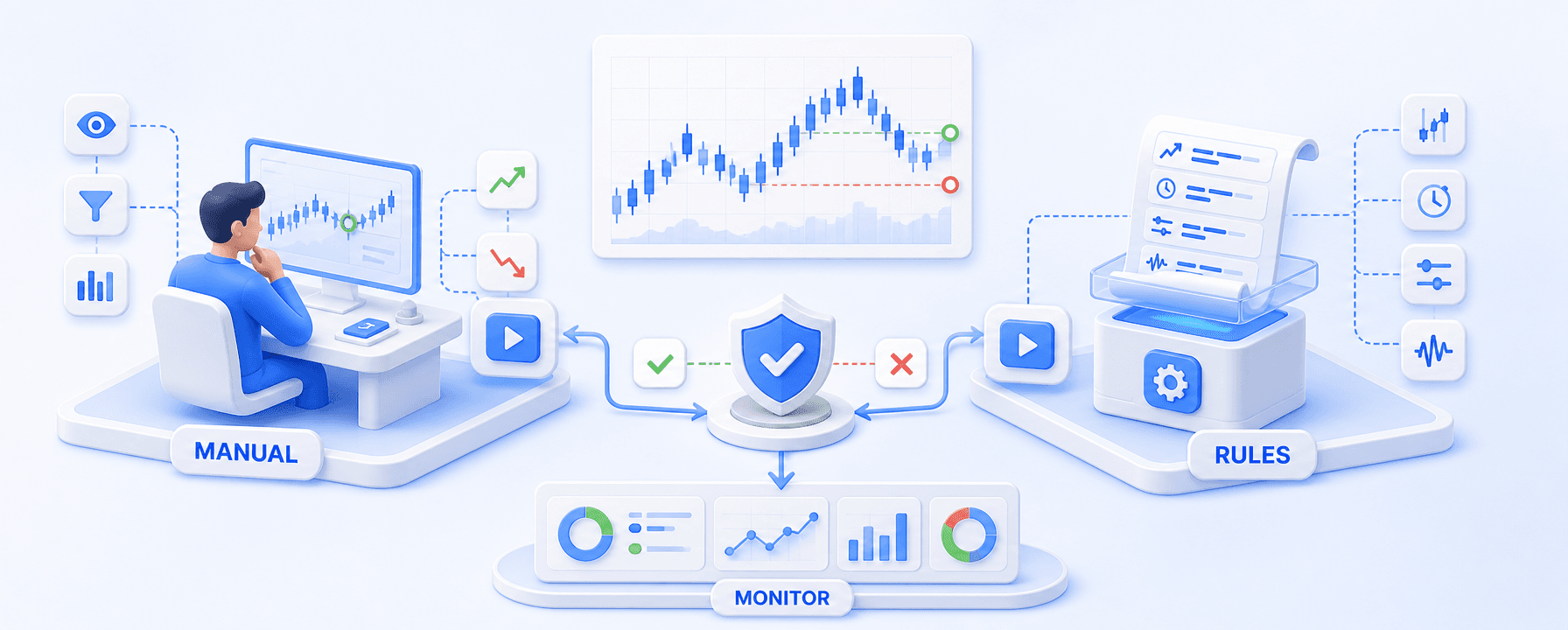
Should I use a trading bot or trade crypto manually? Use a bot when your strategy can be expressed as precise rules, repeated often, and monitored with clear failure controls. Trade manually when the decision depends on changing context, qualitative judgment, or conditions you cannot define in advance. Many traders will find that a hybrid approach is the better fit: make strategy decisions manually and automate only the repetitive execution.
The important distinction is not “machine versus human.” It is who defines the decision, who executes it, and how errors are detected. A bot follows instructions consistently, but it does not turn a weak strategy into a sound one or remove market risk. The CFTC warns against claims that trading bots can guarantee high returns and notes that technology cannot predict sudden market changes.
Note: This comparison is educational, not individualized financial advice. Crypto markets can move sharply, and leverage can magnify losses. Evaluate the strategy, platform, exchange access, and maximum possible loss before committing real funds.
Choose by decision process, not by promised returns
The useful comparison starts with the work your strategy requires. Automated trading is strongest at repeating explicit instructions. Manual trading is strongest when a person must interpret incomplete or changing information before acting.
When manual trading, a bot, or a hybrid approach fits
| Decision factor | Manual trading fits when | A trading bot fits when | Hybrid approach fits when |
|---|---|---|---|
| Rule clarity | Entries and exits depend on context that cannot be reduced to objective conditions. | Entry, exit, position size, and invalidation rules can be written without discretionary phrases. | A person selects the setup, then automation handles orders and predefined exits. |
| Timing and frequency | Opportunities are infrequent enough to watch and execute without rushing. | The same setup may occur at inconvenient hours or across many repeated cycles. | Alerts identify candidates, while automation handles only time-sensitive execution. |
| Need for intervention | New information can quickly invalidate the original thesis. | Normal market noise should not change the rules, and intervention conditions are predefined. | The bot operates inside boundaries, with a manual pause or shutdown rule for abnormal conditions. |
| Execution complexity | The order sequence is simple and occasional. | The plan uses repeatable staged entries, exits, or recurring orders that are easy to mistype manually. | A person approves risk and exposure, while software maintains the order sequence. |
| Oversight capacity | The trader can actively observe positions and maintain a journal. | The trader can monitor system health, alerts, fills, and rule performance even when not watching every tick. | Automation reduces screen time, but scheduled review remains practical. |
| Cost structure | Time is available and trade volume is too low to justify software costs. | Saved execution time and reduced input errors justify subscriptions, alerts, or infrastructure. | Only the most repetitive part is automated, limiting added tools and operational complexity. |
A simple decision rule follows: if you cannot specify what the bot should do when price gaps, an order only partly fills, an alert repeats, or market conditions change, the strategy is not ready for unattended execution. Keep those decisions manual or automate a narrower step.
Automation improves execution consistency, not strategy quality
The main crypto bot benefits are mechanical. Software can apply the same configured condition repeatedly, place an order without hesitation, and maintain a staged sequence that would otherwise require constant attention. This can reduce skipped actions and impulsive deviations from a written plan.
That consistency has a boundary. A bot executes the encoded model, including its blind spots. “Buy when the market looks strong” is not an automatable rule. “Enter when indicator conditions A and B are both true, use a fixed position-size rule, and cancel if condition C occurs” is closer, but it still needs definitions for data source, timeframe, duplicate signals, slippage, and missing alerts.
Manual trading reverses the tradeoff. A person can incorporate news, liquidity changes, conflicting signals, and broader portfolio exposure before acting. That flexibility also creates variation: the trader may delay an exit, change size without a rule, or read the same setup differently after a loss.
This is why automated trading vs. manual crypto is best viewed as a separation of responsibilities. Strategy quality comes from the assumptions and risk logic. Execution quality comes from applying those rules accurately. Automation can help with the second responsibility only when the first has been made explicit.
The hidden workload moves from clicking to system control
A trading bot does not eliminate work. It changes the work from watching and clicking to configuring, validating, and supervising. That shift matters because operational failures can look like strategy failures unless the trader records what the system was expected to do.
Before live use, define these controls:
- Write the complete order logic, including position size, maximum concurrent exposure, entries, exits, cancellation conditions, and the event that disables new trades.
- Check data and trigger assumptions, including symbol, exchange, timeframe, webhook or alert behavior, and what happens if a signal arrives twice.
- Test normal and abnormal paths, including partial fills, price gaps, rejected orders, lost connectivity, and a rapid move through the intended price.
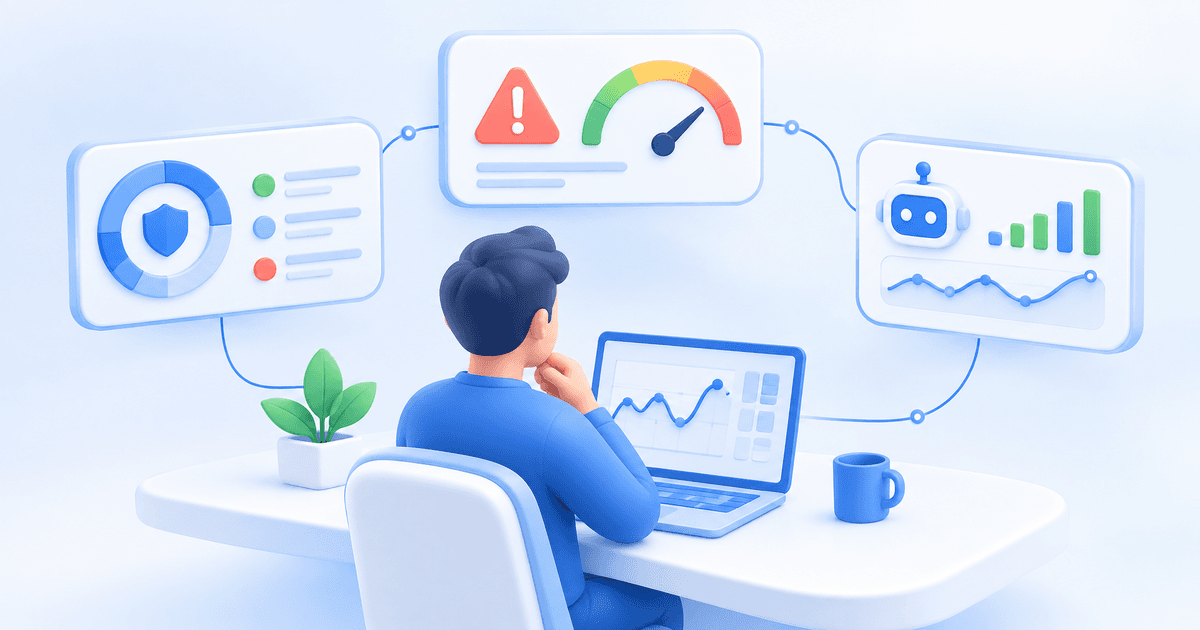
- Monitor observable signals such as bot status, open orders, actual fill price, account exposure, alert delivery, and deviations from the expected sequence.
- Keep a shutdown procedure that can cancel or pause automation without requiring a redesign during a fast market.
These controls are not just for professional systems. FINRA’s algorithmic-trading guidance, written for regulated member firms rather than retail crypto traders, provides a useful operational model: test before production, monitor after deployment, control changes, and retain a way to quickly disable the algorithm.
Costs also extend beyond a bot subscription. They may include charting or alert services, exchange fees, spreads, slippage, funding charges on derivatives, and time spent monitoring. Manual trading has its own hidden cost: attention. A strategy that needs a person available around the clock is not operationally realistic simply because the software bill is zero.
Security and access are part of the comparison. Any system connected to an exchange increases the number of credentials, settings, and services that need protection. Review the permissions requested, use the narrowest access compatible with the workflow, protect every connected account, and verify how to revoke access. Also evaluate the exchange and product itself. The CFTC’s virtual-currency risk advisory highlights volatility, leverage, platform protections, and fraud as material considerations.
A hybrid workflow can contain the failure when conditions change
Consider this hypothetical example. The quantities are illustrative assumptions, not evidence of expected performance. A trader has a range-based strategy for one liquid crypto pair. The assumed rules allow one position at a time, cap allocation at 2% of the test portfolio, use predefined entries and exits, and stop opening trades if price closes outside the identified range.
The trader chooses a hybrid workflow because range selection still depends on manual analysis, while order placement is repetitive. The sequence is:
- The trader identifies the range and records its boundaries, timeframe, size limit, and invalidation condition.
- The automated component places only the predefined orders inside that range.
- The trader checks bot status, open orders, fills, and total exposure at scheduled intervals.
- A daily close occurs outside the range, activating the previously written stop condition.
- The bot is paused, outstanding range orders are reviewed, and no new range is configured until the trader forms a new thesis.
The exception has actually changed the decision: automation fit the repeated order sequence but no longer fit the market premise. The observable result is not simply profit or loss. It is the close outside the boundary and the bot’s resulting status. The correct response under the assumed plan is to stop the automation, not widen the range after the fact to keep the bot active.
This example also shows why “set and forget” is the wrong operating model. A bot can continue doing exactly what it was told after the original reason for doing it has expired. The invalidation rule and monitoring process keep execution tied to the strategy.
Test the workflow before deciding whether to automate it
The lowest-commitment test is not to compare a week of bot returns with a week of manual returns. Short results can be dominated by market conditions and random variation. Instead, test whether automation follows the intended process more reliably than you can, and whether you can supervise it safely.
Run the same written strategy through a simulated or paper environment. Record every expected action before it occurs, then compare expected entries, exits, size, order status, and shutdown behavior with the actual sequence. Include at least one deliberate exception, such as a duplicated alert or invalidation event. If the response is unclear, revise the rule rather than assuming you will intervene correctly under pressure.
Evaluate the test on four observable outcomes: rule fidelity, execution differences, operational reliability, and oversight burden. A bot is a better fit only if it follows the rules as intended, deviations are visible, failures have bounded responses, and monitoring is sustainable. If manual review repeatedly overrides valid signals, either the strategy still contains discretionary judgment or the trader has not accepted its rules.
Cornix provides a simulated demo account with real-time market data for exploring its interface and testing strategies without depositing real funds. For rule-based workflows, Cornix also documents how its TradingView bots act on webhook alerts and how users configure the symbol, trade amount, entries, take-profit orders, and stop settings. Simulation can test workflow behavior, but it cannot fully reproduce live liquidity, slippage, rejected orders, or emotional responses to real losses.
When the written rule is ready, compare the execution path that matches it: Signals Bots for supported provider signals, DCA Bots for planned position-building rules, or TradingView Bots for your own chart alerts.
Test whether your rules are ready for automation
Use the Cornix Demo Account to inspect bot setup, simulated execution, monitoring, and shutdown behavior without committing real trading funds.