
Table of contents
- Core terms for crypto technical analysis
- Read candlesticks within the surrounding trend
- Use pivot points as predefined reference levels
- Keep pivot settings consistent between reviews
- Draw Fibonacci retracements from a defined swing
- Give Fibonacci overlap a specific role
- Read Bollinger Bands as volatility context
- Use simple moving averages without ignoring lag
- Connect crypto technical analysis to a Bitcoin rehearsal
- Turn Telegram analysis into explicit trading instructions
Use crypto technical analysis to identify a market's trend, mark potential entry and exit areas, and specify what would invalidate a trade. Historical charts support conditional decisions, not certainty about the next move. Start with price structure, then add indicators that answer different questions.
Core terms for crypto technical analysis
A trend describes direction; momentum describes the pace of price changes; volume measures completed trading during a period. Support marks an area where buying has interrupted declines, while resistance marks an area where selling has interrupted advances. Treat those areas as observations, not barriers that must hold.
Before drawing anything, record the exchange, pair, market type, timeframe, and observation timestamp. Review broader context before the entry chart. A short-term rally can coexist with a longer-term decline because the charts summarize different periods.
Fundamental analysis asks about the asset and its economic case; technical analysis studies trading behavior. Use the fundamental and technical analysis guide when deciding which question your research must answer. Keep that distinction explicit in your journal.
Read candlesticks within the surrounding trend
A candle's body spans its opening and closing prices; its wicks show the period's high and low. A long wick records an excursion away from the body, but does not establish the next candle's direction. Interpret it against nearby levels and the broader sequence.
For crypto technical analysis, mark repeated swing highs and lows before naming patterns. Draw trend lines through relevant swings without forcing every candle to touch. A triangle or reversal pattern remains a hypothesis until its stated completion condition occurs; chart interpretation involves judgment.
Cornix tracks coin prices, trading volume, and volatility through its market overview tools. Use those observations to select a market for closer study, rather than treating a watchlist change as an entry instruction.
Use pivot points as predefined reference levels
Pivot indicators calculate reference levels from price data, with separate support and resistance lines. Different calculation types produce different levels. Record the type and calculation timeframe alongside your chart so another review uses the same inputs.
In crypto technical analysis, distinguish a calculated pivot from an observed swing. The former comes from a formula; the latter comes from price structure. Decide beforehand whether your setup requires a rejection, a closing break, or a retest, rather than buying whenever price touches a line.
Keep pivot settings consistent between reviews
Pivots offer repeatable reference points because their calculation follows defined inputs. Their usefulness depends on consistent settings: daily and weekly pivots do not describe the same reference period, and changing the calculation changes the result.
Keep the data source and session boundary fixed in your research record. Do not switch pivot types after a losing trade to make the historical chart appear more persuasive. Review the original rule, including occasions when price crossed a level without reversing.
Draw Fibonacci retracements from a defined swing
Fibonacci retracements divide a selected price move into percentage levels. Common plotted levels include 23.6%, 38.2%, 50%, and 61.8%. The tool begins with selected extremes, so your anchor choice is part of the analysis.
For a repeatable crypto technical analysis study, identify the completed swing before drawing the retracement. Keep its anchors unchanged while evaluating that setup. Use the lines as possible reaction areas, not proof that price must recover at a particular percentage.
Give Fibonacci overlap a specific role
A retracement near an existing support area can give you a location to observe. Write the required price behavior there before considering an order. The decision should depend on your stated trigger, rather than the visual appeal of overlapping lines.
Keep location separate from confirmation. Adding several nearby retracement levels does not answer whether the market has actually met your entry rule. Define which swing anchors are eligible, and retain failed reactions in your journal alongside successful ones.
Read Bollinger Bands as volatility context
Bollinger Bands place envelopes around a simple moving average using standard deviation, a measure of dispersion. Common defaults use 20 periods and two standard deviations. Narrowing bands reflect quieter conditions; expansion reflects increased dispersion, without establishing a trade direction.
For crypto technical analysis, separate a range-reversion hypothesis from a breakout hypothesis. Before testing, write whether your rule expects movement toward the average or continuation beyond a boundary. A band touch alone should not choose between those opposing ideas; the bands are intended to accompany other analysis.
Use simple moving averages without ignoring lag
A simple moving average, or SMA, gives equal weight to prices within its selected period. Longer periods smooth more fluctuations but introduce more lag. A crossover therefore summarizes a change in past prices rather than guaranteeing the next move.
Momentum indicators answer a different question. Relative Strength Index, or RSI, measures recent gains against losses; moving average convergence/divergence, or MACD, compares moving averages. Neither makes a conflicting trend reading disappear.
When indicators disagree, apply your prewritten hierarchy. For example, require the broader trend condition first, then a completed entry trigger. If either fails, skip the setup. Avoid counting several price-derived indicators as independent votes.
Connect crypto technical analysis to a Bitcoin rehearsal
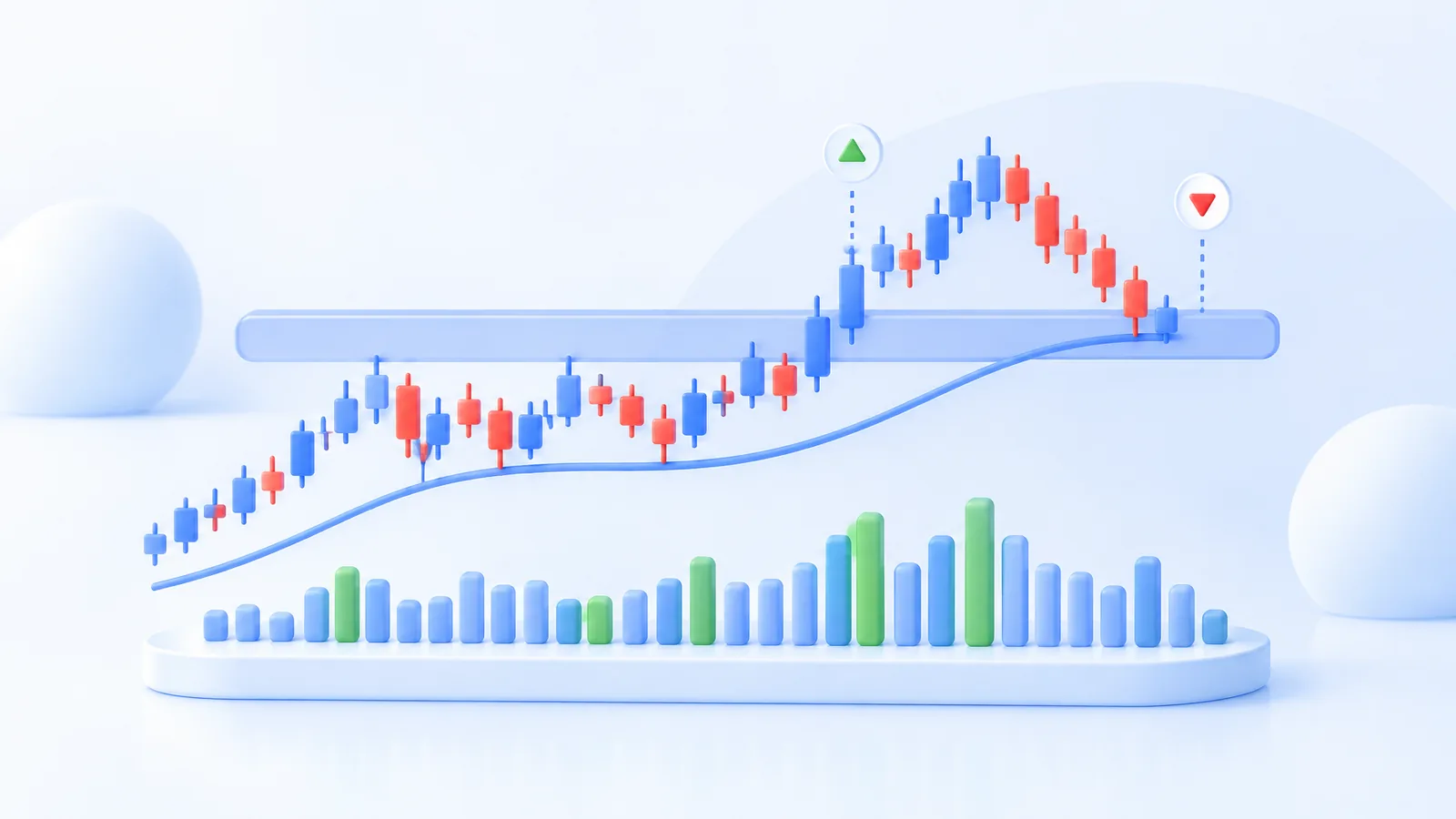
Consider a hypothetical Bitcoin spot chart, not a current market call. Begin with the daily trend, then study an hourly range. Mark its boundaries before the breakout and retain the same exchange feed throughout the exercise.
Write a conditional plan:
- Require an hourly close above the marked resistance and a subsequent retest that holds.
- Compare breakout volume with the preceding range rather than examining the candle alone.
- Place planned invalidation below the retest structure and define profit-taking before entry.
- Choose quantity around the loss you can afford at that exit, allowing for trading costs.
- Skip the trade if the retest fails or the entry condition expires.
Keep this as a research example, not recommended Bitcoin parameters. Record skipped setups and unsuccessful breakouts too. Rehearse the complete rule before changing indicators to improve its historical appearance.
Turn Telegram analysis into explicit trading instructions
For crypto technical analysis shared through Telegram, separate the provider's chart interpretation from your account's orders. Ask whether the signal identifies the market, entry conditions, exits, and cancellation rule. Review losing signals alongside winners before choosing what to follow.
Cornix copies signals from Telegram signal groups to exchange accounts through its Signals Bots workflow. Keep your allocation and exit decisions explicit before enabling automatic following.
If your strategy adds entries as price falls, define its maximum exposure separately. Cornix provides configurable entries, exits, and risk controls through its DCA Bots. Repeated entries should follow a bounded strategy rather than an improvised response to losses.
Explore the automated trading overview to connect your rules with execution, or use the trading article library for a specific mechanism. Once your rule is written, continue to the bot registration page.
Frequently Asked Questions
Can crypto technical analysis work on a line chart?
A line chart can show closing-price trends, but it omits the period's intrabar range. Candlestick and bar charts retain opening, high, low, and closing prices, making them more informative when your rule depends on those details.
Does a Fibonacci retracement predict how long a pullback will last?
Fibonacci retracements identify potential price levels, rather than a timetable for reaching them. Keep your price condition separate from the deadline after which you will cancel the setup.