Table of contents
- How cryptocurrency algorithmic trading works
- Start with a rule that can be executed
- Exchange access is the operational boundary
- Test execution separately from strategy results
- Put controls around every automated strategy
- Choose the Cornix workflow that fits your rule
Cryptocurrency algorithmic trading uses software to turn a written trading rule into repeatable exchange instructions. It can automate when an order is sent, its size, entry and exit settings, or the management of open orders. It does not establish that the rule is profitable, and it does not remove your responsibility for market exposure, account access, or supervision.
Cornix supports automation through signal-following, TradingView alerts, DCA strategies, and Grid strategies, so a trader can connect a defined input to a configured execution workflow (Cornix getting-started guide). The useful question is not whether an algorithmic trading bot can trade 24/7. It is whether you can state exactly what should happen, how much capital it may use, and what should stop it.
How cryptocurrency algorithmic trading works
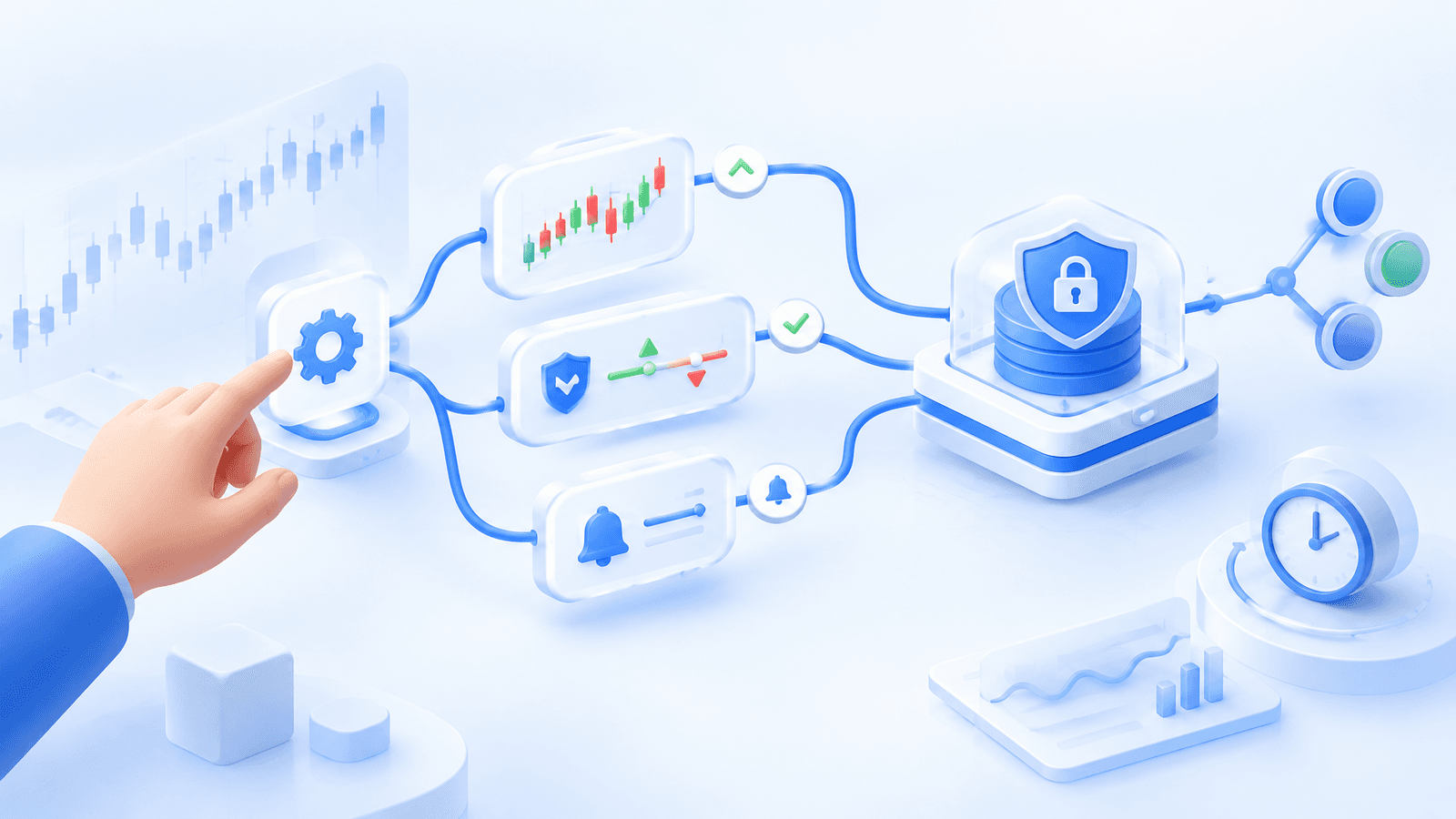
A practical automated workflow has four layers. First, you define an input: perhaps a scheduled purchase, a price-range rule, a structured signal, or a chart alert. Second, algorithmic trading software applies the settings you chose, such as the account, market, order size, entries, exits, and limits. Third, it sends an authorized request through the exchange connection. Finally, the exchange accepts, rejects, partially fills, or leaves the order open under live market conditions.
Those layers explain why automation is execution, not prediction. A clear rule can still encounter a rejected order, a changing price, a minimum-order requirement, or an interrupted connection. Binance documents that its API is asynchronous, that requests can time out with an unknown execution status, and that its API is subject to request and order limits. A reliable workflow therefore records what the rule intended and checks what the exchange actually did.
Start with a rule that can be executed
Algorithmic trading needs an instruction that is specific enough for software to follow without improvising. “Buy when momentum looks strong” is an observation, not an executable rule. “Buy a fixed dollar amount of BTC at a scheduled interval, stop after a stated allocation, and pause when a stated condition occurs” is a rule you can configure and review.
For a novice, the smallest useful starting point is one market, one account, one input, and one maximum allocation. For a professional workflow, the same principle applies at greater scale: separate the strategy source from routing, account permissions, and oversight. Do not combine discretionary judgment and unattended execution unless the approval step itself is part of the process.
Common inputs serve different jobs. A signal workflow follows a structured trade instruction from a channel or provider. A TradingView workflow responds to an alert you have already defined. DCA automation manages repeated entries according to a preset plan. Grid automation manages orders within a selected price structure. Choose the input based on where the trading decision originates, not on which bot name sounds most sophisticated.
Exchange access is the operational boundary
A bot cannot place orders until it can communicate with the exchange account. That typically means connecting an API key with only the permissions required for the workflow. Binance separates trading permission from account-data permission and advises that API credentials are sensitive. Keep secrets private, use a dedicated key where the exchange supports it, and do not grant withdrawal authority simply because you want to automate trading.
Compatibility is also a buying gate. Confirm the exact exchange, account type, market type, trading pair, order minimums, and any futures settings before activating a workflow. Cornix lists the spot, futures, and inverse exchange connections it supports, while also identifying regional exchange domains that are not supported (Cornix supported exchanges). An automation setup that is valid on one connected account may not fit another.
Test execution separately from strategy results
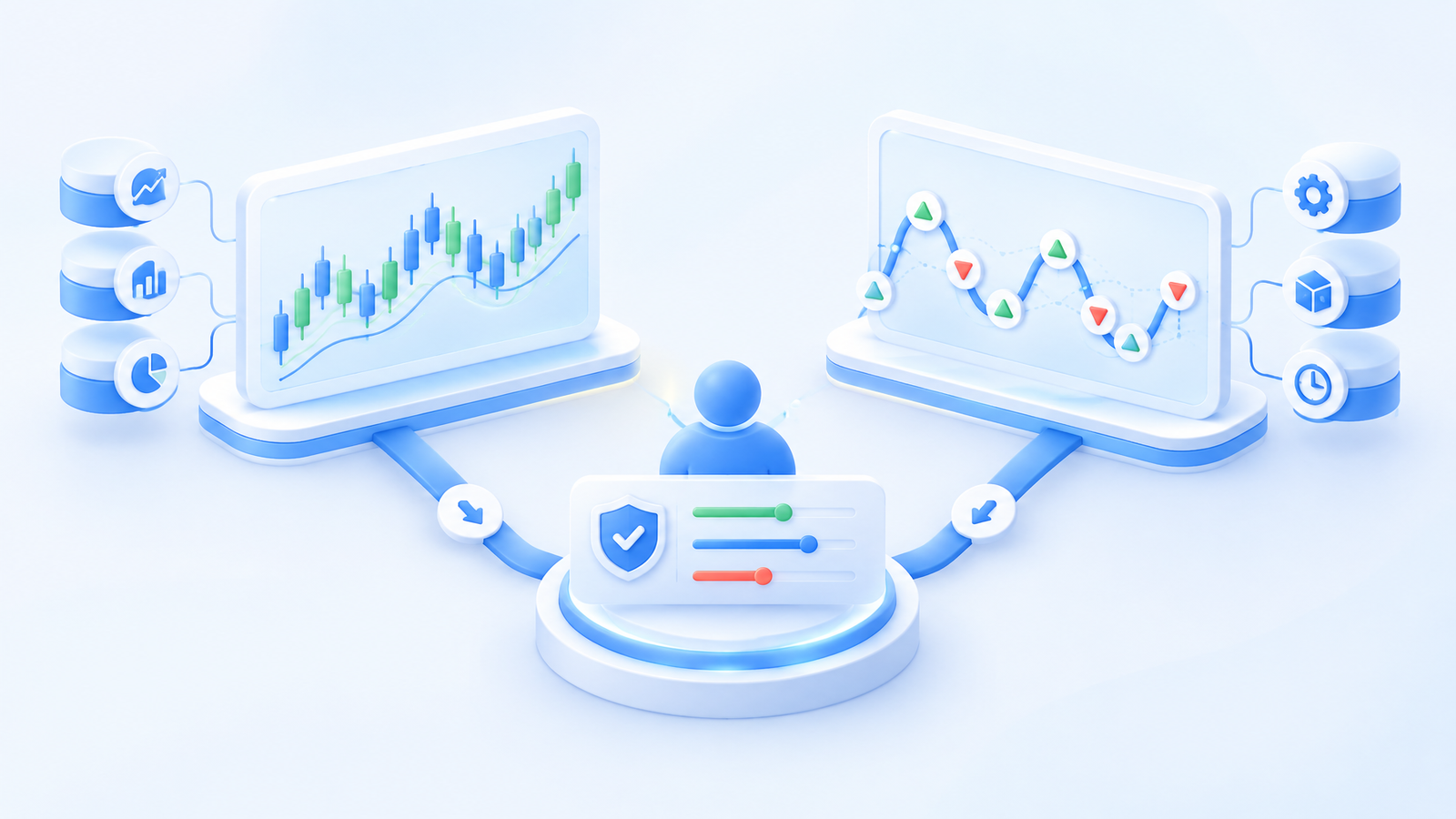
Backtesting and simulated execution answer different questions. A backtest asks how explicit rules behaved on selected historical data. It can help you compare drawdown, trade frequency, exposure, and sensitivity to settings. It cannot recreate every live condition, including liquidity, slippage, delays, fees, or changing market behavior.
A demo or small, closely monitored test instead checks the operational chain: did the intended alert or signal reach the intended bot, use the intended account, and create the intended order behavior? This is where configuration errors become visible. Test ordinary cases, then test failure handling: a missed alert, an order that does not fill, a duplicate trigger, a manual close, or a connection problem.
For alert-driven automation, protect the delivery step as carefully as the rule. Keep credentials out of webhook messages and verify that an alert reaches the intended bot and account. A webhook delivers an event. It is not proof that the strategy is sound or that the exchange will fill an order at the price you expected.
Put controls around every automated strategy
Before activation, define the maximum amount per trade, total allocation, leverage if applicable, exits, stop condition, notification path, and shutdown action. Then decide what deserves human review. A rule may be fully automated, but a large position change, unusual volatility, repeated failed orders, or a change to the strategy should trigger a check rather than silent continuation.
Monitor both the bot and the exchange. Review open orders, fills, canceled orders, position state, balances, and any manual intervention. This creates an audit trail that helps you distinguish a strategy loss from a configuration error. It also keeps automation from becoming invisible just because it is convenient.
Be especially skeptical of claims that an algorithm, AI, or bot guarantees returns. The CFTC warns that promoters use automated-algorithm and crypto trading claims to market unreasonable or guaranteed results, and notes that AI cannot predict sudden market changes (CFTC advisory on AI trading-bot claims). Automation can enforce discipline around a rule. It cannot eliminate market risk or make a vague idea dependable.
Choose the Cornix workflow that fits your rule
Cornix gives you several ways to automate an existing trading plan. The right starting point depends on where the decision comes from:
| Your starting point | Cornix workflow | What to define first |
|---|---|---|
| A structured trade signal | Signal Bots | Which signals to follow, account settings, and trade limits |
| A chart condition you define | TradingView alerts | The alert trigger, destination, and order settings |
| A plan to add to a position | Smart DCA Bots | Total allocation, additional entries, and exit |
| Repeated movement within a range | Grid Bots | Range, grid spacing, allocation, and response to a range break |
That flexibility lets you choose the automation around your strategy rather than reshape the strategy around one bot type. Start with one clearly defined rule, test the route from input to exchange, and expand once the account and risk controls behave as intended. Explore how to automate crypto trading with Cornix.
Frequently Asked Questions
What is cryptocurrency algorithmic trading?
It is the use of software to apply defined trading rules and send authorized order instructions to a crypto exchange. The rules may govern timing, size, entries, exits, or order management, but the trader still owns the strategy and risk decisions.
Is algorithmic trading the same as a crypto trading bot?
A crypto trading bot is one implementation of algorithmic trading. Algorithmic trading describes the rule-based execution process; the bot is the software workflow that receives the rule or input, applies settings, and sends orders to an exchange.
Can backtesting prove an automated crypto strategy will work live?
No. Backtesting can show how a defined rule behaved on selected historical data, but live results can differ because of fees, liquidity, slippage, execution delays, and changing market conditions (Cornix backtesting guide).
What API permissions should an automated crypto trading setup use?
Use the smallest permissions needed for the intended workflow. Trading and account-data access may be required, depending on the setup, while withdrawal authority should not be enabled just to place automated trades (Binance API permission documentation).